Neighbourhoods · 4 min read
Pontocho, Kyoto: Riverside Dining in the Lantern-Lit Alley
How to visit Pontocho: kawadoko river dining, Kiyamachi's bars, and when to go for each. Kyoto's second geisha district, between Shijo and Sanjo.
By Todokyoto · Updated October 28, 2026
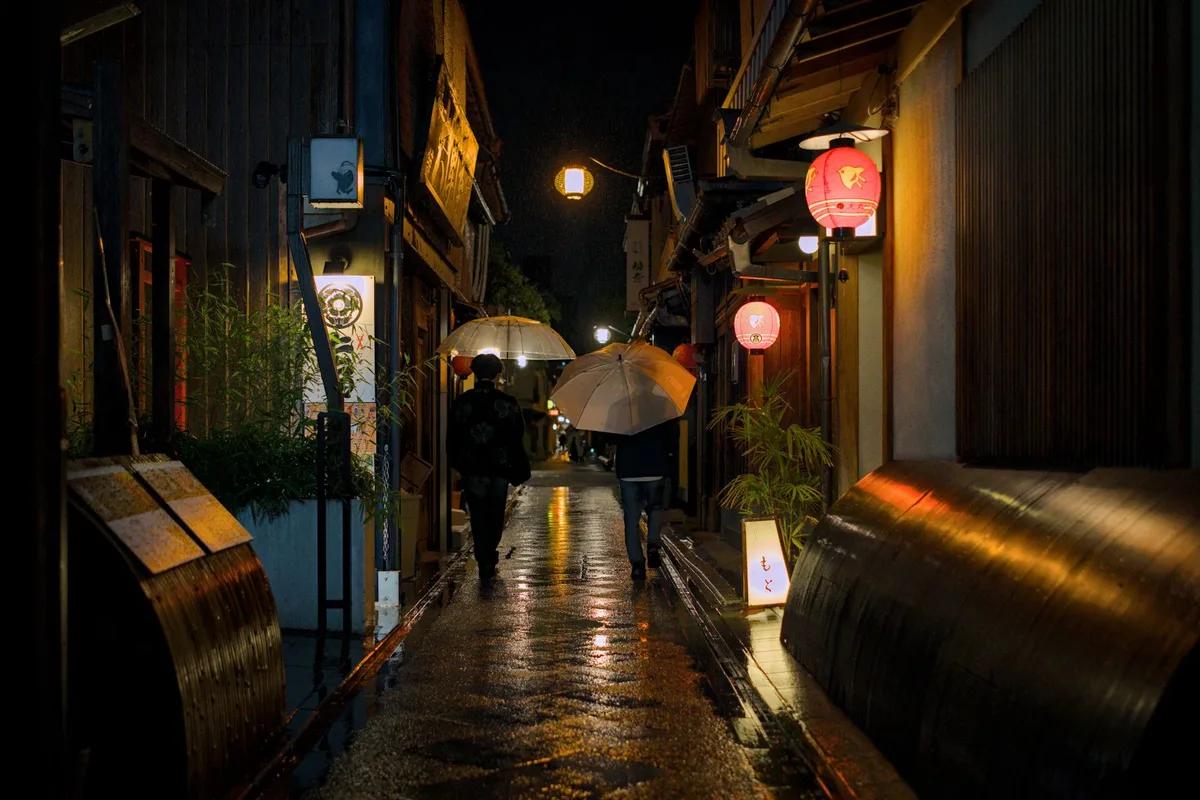
Pontocho is a single narrow alley, barely wide enough for two people to pass comfortably, running between Shijo-dori and Sanjo-dori along the Kamo River. It is Kyoto's second geisha district after Gion, and one of the city's densest concentrations of kaiseki restaurants and riverside bars. One block east, along the old Takase Canal, Kiyamachi feels like a different street entirely. Treating the two as the same thing is the easiest way to end up in the wrong place for what you actually wanted.
Getting There
Pontocho runs about 500 metres between its two ends, so one station near either end covers it. For the Shijo-dori end, Kawaramachi Station on the Hankyu Kyoto Line sits right at the Shijo-Kawaramachi intersection, and Gion-Shijo Station on the Keihan Main Line is a short walk across the river. For the Sanjo-dori end, Sanjo Station, also on the Keihan Main Line, is the closer stop. See Getting Around Kyoto for fares and passes.
Pontocho Itself: Kaiseki and Teahouses
Pontocho's own alley is quiet and formal by Kyoto nightlife standards: wooden machiya fronts, paper lanterns, and a concentration of kaiseki restaurants and traditional teahouses that favour reservations over walk-ins. Roan Kikunoi, the more accessible Pontocho branch of the Michelin-starred Kikunoi, is a good example of what the alley does best: multi-course seasonal menus built on classic Kyoto cuisine, formal and unhurried service, and reservations that need to be made well ahead, ideally through a hotel concierge.
Kawadoko: Dining Over the River
In summer, some restaurants along the river build kawadoko (also called noryo-yuka) platforms out over the water, a Kyoto tradition for escaping the heat while eating. The exact season varies by restaurant and by source: most accounts put the core window at roughly May through September, with some venues extending into October, and platforms can be moved indoors on short notice if the river rises or weather turns. Any extra cost for the seating itself varies by restaurant, from no additional charge to a modest flat fee; there's no single standard premium, so check directly with the restaurant when booking rather than assuming a figure.
Kiyamachi: The Other Street
One block east of Pontocho runs Kiyamachi, lined with small bars and izakaya along the old Takase Canal. Kiyamachi Riverside Bar Row is a livelier, younger, and cheaper scene than Pontocho's own alley: original cocktails, inexpensive highballs, and mostly tiny one-room bars better suited to hopping between a few than settling in for the night. Expect a cover or table charge of a few hundred yen at sit-down bars, standard practice across Japan rather than anything specific to this street.
The canal itself dates to around 1611, when the merchant Suminokura Ryoi built it to move lumber and goods into the city; it ran for roughly 300 years, once carrying over a hundred flat-bottomed boats, before closing in 1920. What's left today is the atmosphere rather than working traffic: a quiet, lantern-lit waterway behind the bars.
Geiko and Maiko in Pontocho
Pontocho is generally counted as Kyoto's second hanamachi (geisha district) by reputation, after Gion. The same etiquette applies here as anywhere in the city: geiko and maiko are working professionals moving between appointments, not performers for tourist photos. Don't block their path, use flash, follow them, or ask for a photo. Gion's 2024 rule restricting tourist entry to certain private alleys off Hanamikoji-dori is specific to Gion; no comparable restriction has been reported for Pontocho as of this writing, but the underlying courtesy, giving way and keeping a camera down, holds regardless of which district you're in.
How Long to Allow
An hour covers a walk through both streets. An evening, ideally starting before sunset to see the lanterns come on, is the better way to actually use the area: dinner in Pontocho or a kawadoko seat if it's the season, then a drink or two in Kiyamachi afterward.
Practical Notes
- Reserve ahead for sit-down restaurants in Pontocho, especially anything kaiseki-style; walk-ins are common in Kiyamachi's smaller bars but less so in Pontocho's restaurants.
- Carry cash: smaller bars and older restaurants don't always take cards.
- The alley is narrow enough in places that two people can't easily pass side by side. Move aside for others rather than stopping to photograph mid-path.
- Rubbish bins are scarce, as throughout Kyoto. Carry out what you bring in.
Build Your Itinerary
Build a day-by-day Kyoto itinerary filtered by pace, focus and neighbourhood, covering landmarks, museums, food and nightlife.